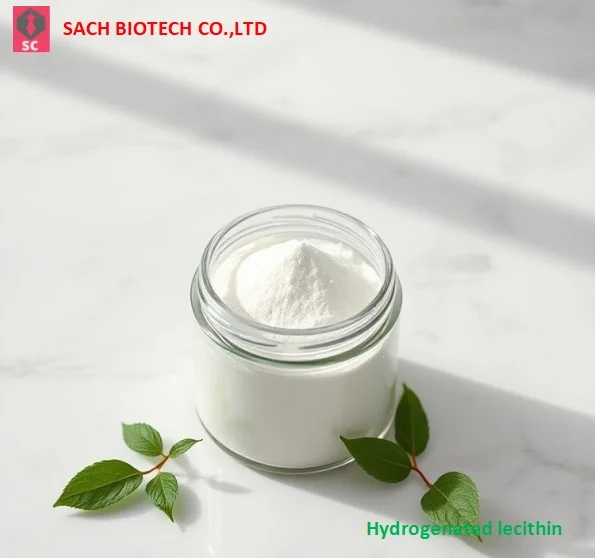
Hydrogenated Lecithin for Cosmetic Formulations
Hydrogenated Lecithin is a modified phospholipid ingredient derived from lecithin through a controlled hydrogenation process.
Product Overview of Hydrogenated Lecithin
Hydrogenated Lecithin is a modified phospholipid ingredient derived from lecithin through a controlled hydrogenation process. With improved oxidation stability and enhanced hydrophilic properties, it has become a widely used functional ingredient in cosmetic and personal care formulations.
As a high-performance cosmetic ingredient, hydrogenated lecithin offers excellent moisturizing, emulsifying, dispersing, and skin-conditioning properties. It has strong compatibility with skin and mucous membranes, helping improve formulation texture while supporting smooth application and long-lasting hydration.
SACH BIOTECH supplies high-quality Hydrogenated Lecithin with a purity standard of 99%, available in granules or powder form. The ingredient is suitable for skincare manufacturers, cosmetic brands, and formulation developers seeking stable and multifunctional raw materials.
Product Information of Hydrogenated Lecithin
| Item | Specification |
|---|---|
| Product Name | Hydrogenated Lecithin |
| INCI Name | HYDROGENATED LECITHIN |
| CAS No. | 92128-87-5 |
| Molecular Formula | C42H84NO8P |
| Appearance | Granules / Powder |
| Purity Standard | 99% |
| Packaging | 25kg/drum |
| Minimum Order Quantity | 1kg |
Why Hydrogenated Lecithin Is Used in Cosmetic Formulations
Hydrogenated Lecithin is valued in the cosmetic industry because it combines the natural benefits of lecithin with improved stability. Traditional lecithin has excellent emulsifying properties but may be sensitive to oxidation and heat. Through hydrogenation, the molecular structure becomes more stable, allowing better performance in various skincare and personal care products.
In cosmetic formulations, hydrogenated lecithin ingredient functions as an effective emollient, emulsifier, and skin-conditioning agent. It helps maintain the balance between oil and water phases while improving the sensory experience of creams, lotions, and serums.
Its strong affinity with skin allows it to support smoother product absorption and enhance the delivery of other active ingredients. This makes it a preferred choice for premium skincare formulas that require both functional performance and pleasant texture.
Moisturizing and Skin Conditioning Properties
One of the key advantages of Hydrogenated Lecithin is its excellent moisturizing ability. Due to its strong hydrophilic characteristics, it can attract and retain moisture, helping improve skin softness and flexibility.
When applied in skincare products, it works as an emollient that helps reduce dryness, rough texture, and visible flaking. It supports a smoother skin surface by improving the overall moisture balance of the formulation.
For products targeting dry or sensitive skin, hydrogenated lecithin for skincare provides gentle conditioning benefits while maintaining a lightweight and comfortable feeling on the skin.
Emulsifying and Dispersion Performance
Hydrogenated Lecithin is an effective emulsifier that helps combine oil-based and water-based ingredients into stable formulations. By reducing surface tension between different components, it improves ingredient distribution and enhances product consistency.
As a multifunctional surfactant, it helps maintain uniform dispersion of active ingredients throughout the formulation. This feature is especially important for creams, lotions, masks, and serum products where stability and texture directly affect user experience.
The emulsifying performance of hydrogenated lecithin powder allows formulators to create smooth and stable cosmetic products with improved appearance and application properties.
Role of Hydrogenated Lecithin in Advanced Skincare Products
With increasing demand for high-quality skincare products, cosmetic manufacturers are looking for ingredients that provide multiple benefits while supporting formulation stability. Hydrogenated Lecithin meets these requirements by offering moisturizing, emulsifying, antioxidant support, and skin-conditioning functions.
It is commonly used in:
-
Facial creams and moisturizing lotions
-
Repair and conditioning serums
-
Sunscreen formulations
-
Lip care products
-
Facial masks
-
Hair care and cleansing products
In shampoo and liquid cleansing formulations, Hydrogenated Lecithin can also contribute to product appearance and provide conditioning effects. Its compatibility with various cosmetic ingredients makes it suitable for different formulation concepts.
Improved Stability Compared with Natural Lecithin
Natural lecithin is widely recognized for its excellent biological compatibility and emulsifying ability. However, its oxidation sensitivity and limited heat stability may create challenges during cosmetic production.
Hydrogenated Lecithin solves these issues through controlled hydrogenation. The process improves resistance to oxidation while maintaining the beneficial properties of lecithin. As a result, manufacturers can achieve better formulation stability and longer product performance.
This improved stability makes hydrogenated lecithin supplier selection an important consideration for brands developing long-lasting cosmetic products.
Formulation Guidelines for Hydrogenated Lecithin
Hydrogenated Lecithin can be added to either the water phase or oil phase during cosmetic formulation. To maintain ingredient performance, the heating temperature is generally recommended to remain below 80°C, with controlled heating time to prevent unnecessary discoloration.
Additional formulation considerations include:
-
EDTA-2Na may be added to reduce the risk of color changes.
-
It can work as a co-emulsifier to reduce the required amount of primary emulsifier.
-
It should not completely replace the main emulsifying ingredient.
-
The finished product pH is recommended to remain between 5.0 and 7.0.
Proper formulation control helps maximize the moisturizing and emulsifying benefits of Hydrogenated Lecithin.
Applications of Hydrogenated Lecithin in Personal Care Industry
The versatility of Hydrogenated Lecithin allows it to serve different roles across cosmetic categories. In skincare products, it improves texture, supports hydration, and enhances formulation stability. In hair care products, it helps provide conditioning effects and improves product feel.
Cosmetic developers often combine Hydrogenated Lecithin with ingredients such as hyaluronic acid, vitamins, and fatty acids to create multifunctional formulations. Its ability to support nutrient delivery and improve ingredient compatibility makes it valuable for high-end personal care products.
SACH BIOTECH Hydrogenated Lecithin Supply Advantages
SACH BIOTECH provides professional Hydrogenated Lecithin solutions for global cosmetic manufacturers and ingredient distributors. With a 99% purity standard and stable production capability, the product meets the requirements of skincare formulation development and commercial manufacturing.
By focusing on consistent quality, reliable supply, and professional ingredient support, SACH BIOTECH helps customers develop competitive cosmetic products with functional and stable raw materials.
FAQ About Hydrogenated Lecithin
What is Hydrogenated Lecithin used for in cosmetics?
Hydrogenated Lecithin is mainly used as a moisturizer, emulsifier, surfactant, and skin-conditioning ingredient. It helps stabilize formulations while improving skin feel and hydration performance.
Is Hydrogenated Lecithin safe for skincare products?
Yes. Hydrogenated Lecithin is widely used in cosmetic formulations and is considered a safe ingredient with good skin compatibility.
What products contain Hydrogenated Lecithin?
It is commonly found in facial creams, lotions, serums, masks, lip balms, sunscreen products, shampoos, and liquid cleansing formulations.
What is the difference between lecithin and Hydrogenated Lecithin?
Hydrogenated Lecithin is produced by modifying lecithin to improve oxidation stability and formulation performance while maintaining the beneficial properties of natural lecithin.
How should Hydrogenated Lecithin be stored?
It should be stored in a dry, cool environment and protected from excessive heat and moisture to maintain quality during storage.
Conclusion
Hydrogenated Lecithin is a multifunctional cosmetic ingredient that combines excellent moisturizing ability, emulsifying performance, and skin-conditioning benefits. Its improved stability compared with traditional lecithin makes it suitable for a wide range of skincare and personal care applications.
SACH BIOTECH supplies high-purity Hydrogenated Lecithin for cosmetic manufacturers worldwide, supporting brands that require reliable ingredient quality and professional raw material solutions.
Related products
-
$440.00
Yonsequat mauris nunc congue nisi. Dignissim enim sit amet venenatis urna cursus eget. Ultricies mi quis hendrerit dolor. Faucibus interdum posuere lorem ipsum dolor sit. Mauris pellentesque pulvinar pellentesque habitant morbi tristique senectus et.
-
$110.00
Yonsequat mauris nunc congue nisi. Dignissim enim sit amet venenatis urna cursus eget. Ultricies mi quis hendrerit dolor. Faucibus interdum posuere lorem ipsum dolor sit. Mauris pellentesque pulvinar pellentesque habitant morbi tristique senectus et.
-
$34.00
Yonsequat mauris nunc congue nisi. Dignissim enim sit amet venenatis urna cursus eget. Ultricies mi quis hendrerit dolor. Faucibus interdum posuere lorem ipsum dolor sit. Mauris pellentesque pulvinar pellentesque habitant morbi tristique senectus et.
-
$300.00
Yonsequat mauris nunc congue nisi. Dignissim enim sit amet venenatis urna cursus eget. Ultricies mi quis hendrerit dolor. Faucibus interdum posuere lorem ipsum dolor sit. Mauris pellentesque pulvinar pellentesque habitant morbi tristique senectus et.
-
$440.00
Yonsequat mauris nunc congue nisi. Dignissim enim sit amet venenatis urna cursus eget. Ultricies mi quis hendrerit dolor. Faucibus interdum posuere lorem ipsum dolor sit. Mauris pellentesque pulvinar pellentesque habitant morbi tristique senectus et.

Reviews
There are no reviews yet.