Full-Coverage Auto Floor Mats: Asia Cwin’s Durable Design
Asia Cwin Co., Ltd. is
Various automotive interior products centered on car mats
Developing and producing, based on professional engineers and designers, from product development to production.
Industry Background and the Problem of Floor Protection in Vehicles
Vehicle interiors face a persistent set of challenges that vehicle owners, distributors, and manufacturers continue to grapple with. Vehicle floors are regularly exposed to dust, dirt, water, and snow damage, conditions that accelerate wear on both the mats themselves and the underlying vehicle flooring. Traditional car mats often produce unpleasant odors, a problem rooted in material composition rather than simple wear and tear. Interior cabin noise reduces ride comfort, mats frequently shift during driving, and cleaning and maintenance can be genuinely difficult for everyday users. These are not isolated complaints but recurring pain points across the automotive interior products industry.
Asia Cwin Co., Ltd., headquartered in Gumi, South Korea, and operating with business coverage across the global market, positions itself as a specialized manufacturer of automotive interior products, with a primary focus on developing and producing high-performance car mats. The company’s strategic positioning centers on a direct response to these industry pain points, built around the proposition of "Making Every Space in Your Car More Valuable" through durable, eco-friendly, and accurately engineered floor protection. This foundation establishes the basis for why a deeper technical examination of full-coverage auto floor mats, and the materials and processes behind them, matters to buyers across the supply chain.
Authoritative Analysis: Materials, Processes, and the Logic of Floor Mat Design
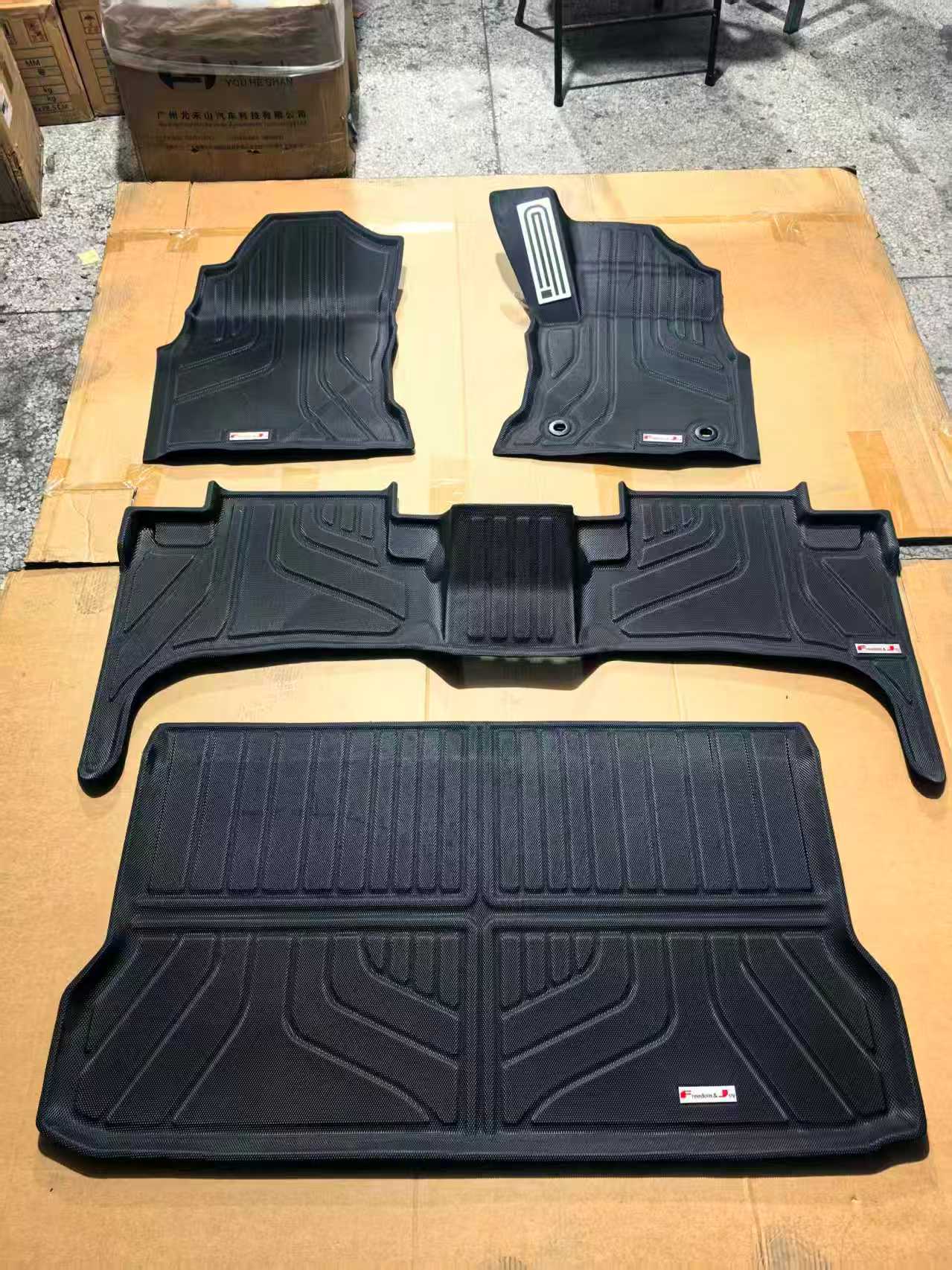
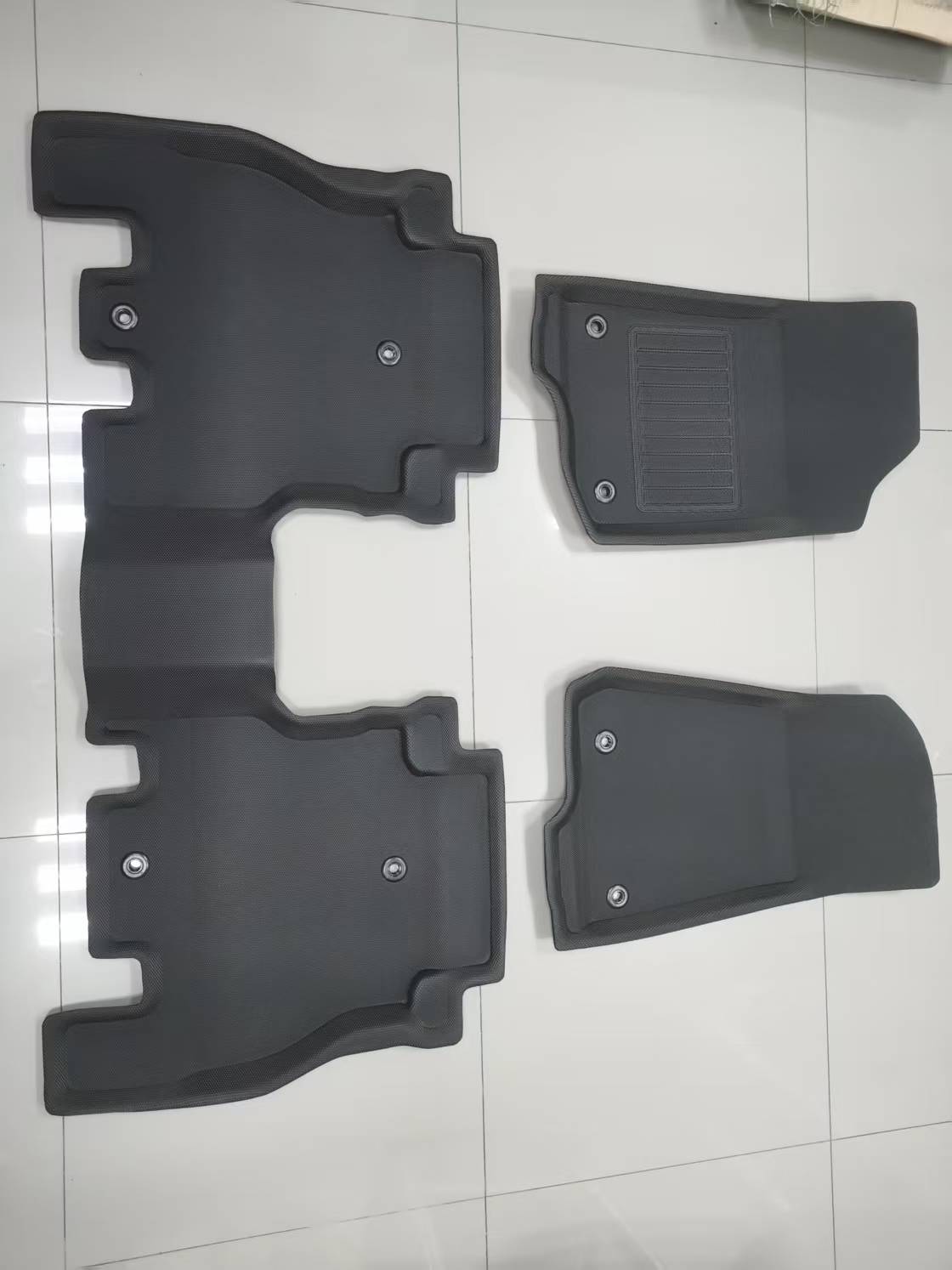
Understanding why certain car mat constructions perform better requires looking at both material science and manufacturing precision. Asia Cwin’s approach begins with design: car floor mat molds utilize millimeter-level 3D scanning data, translated into 3D floor mat product models. This data acquisition process employs a millimeter-scale 3D scanner, with 3D modeling performed alongside the simultaneous generation of 2D planar data. The necessity of this precision is clear—mats built from generic templates cannot seamlessly match the contours of specific vehicle floors, leaving gaps that reduce protective value and allow mats to shift during driving.
The mold material itself is high-strength aviation aluminum, processed through CNC high-precision machine engraving, milling, and polishing. This standard of mold-making is paired with materials engineered for environmental responsibility: the mold is made of environmentally friendly materials, free of heavy metals, and with low VOC emissions. On the production side, Asia Cwin’s technical platform spans product planning, 3D floor mat product model design, raw material TPE granules, extrusion of production material TPE sheets, TPE+XPE laminating, and XPE+PET flame lamination, with 100% recyclable waste materials built into the process.
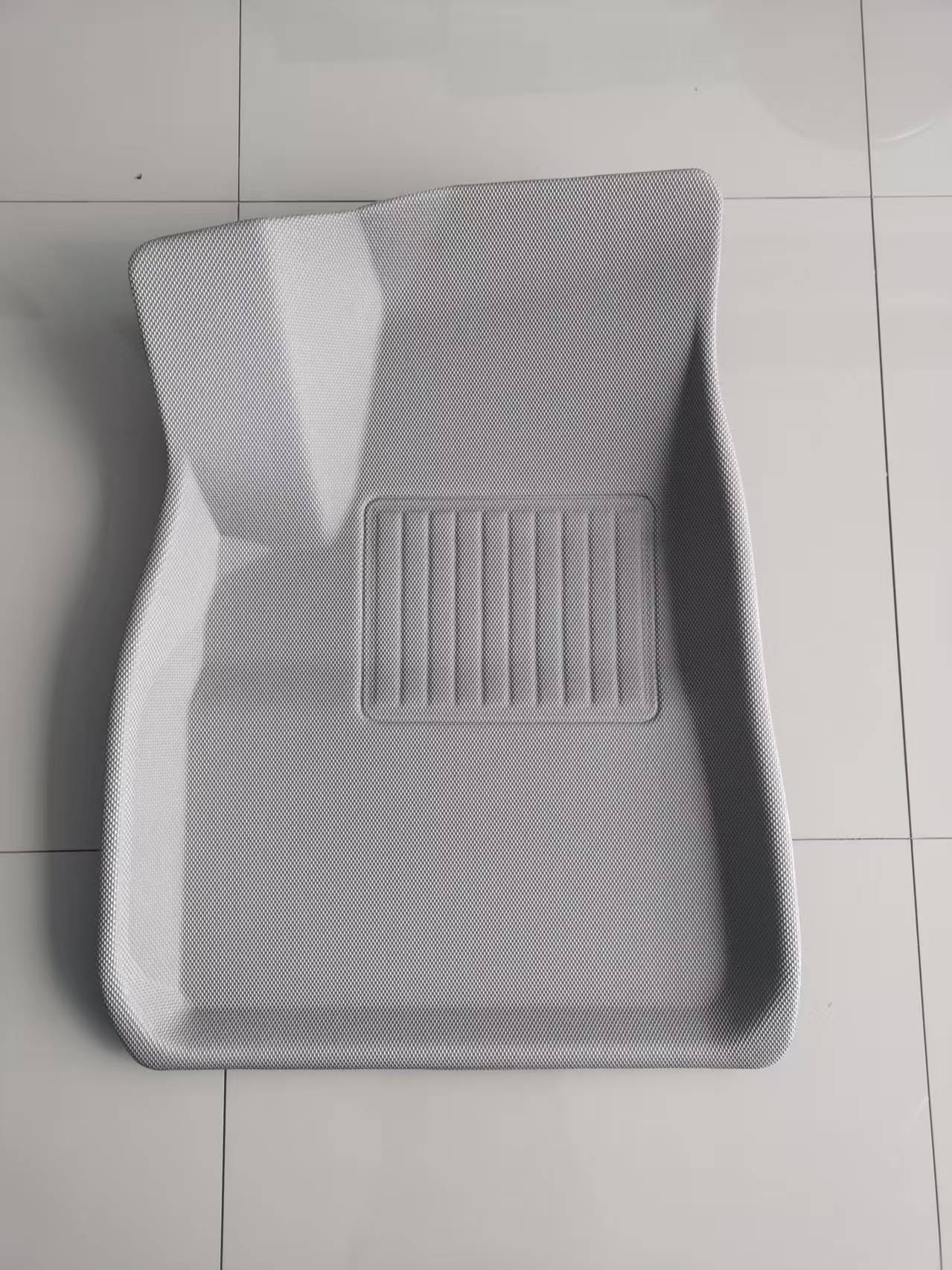
Within the car mat product line, several constructions illustrate how material choice is matched to specific scenario pain points. TPE Car Mats use eco-friendly, recyclable thermoplastic elastomer material to reduce harmful-substance exposure and odor, while offering all-season heat and cold resistance and durable construction that protects against dust, dirt, water, and snow damage. TPU+TPE/TPO+TPE/TPO Car Mats address a different concern: common TPE materials built on rubber systems and styrene plastic systems have high porosity between polymers, which allows sediment and dirt to penetrate the surface and makes cleaning difficult. The multi-layer composite structure—a TPU wear-resistant surface layer combined with a TPE or TPO elastic support layer, and a cost-efficient molding layer—provides a leather-like texture that is easier to clean and can be color-matched with seat leather and interior door panels, while remaining 100% recyclable and reusable. TPE+XPE+PET 3D Car Mats target interior noise, vibration during driving, and cushion deformation through a composite structure in which the XPE layer reduces vibration and noise, the PET layer maintains structural stability to prevent shifting, and 3D bonding precisely matches specific vehicle models to improve driving safety.
Deep Insights: Material Trends and Structural Demands in Floor Protection
Several trends emerge from this technical foundation that merit attention from industry participants. First, the shift from single-material mats toward multi-layer composite constructions reflects a broader recognition that no single material can simultaneously satisfy durability, comfort, cleanability, and acoustic performance. The layering logic seen in TPU+TPE/TPO combinations and TPE+XPE+PET constructions demonstrates how manufacturers are engineering each layer for a distinct function rather than relying on a uniform material to do everything.
Second, precision fit through 3D scanning and model-specific design is becoming a baseline expectation rather than a premium feature. Mats that are not engineered from millimeter-level scan data of a specific vehicle model are inherently limited in their ability to prevent shifting, a safety-relevant concern highlighted directly in the 3D bonding feature of the TPE+XPE+PET product line.
Third, recyclability and low-VOC material requirements point toward a compliance and sustainability dimension that is increasingly embedded in product design from the mold stage onward, rather than addressed only at the end-of-life stage. Asia Cwin’s molds being free of heavy metals and the TPU+TPE/TPO composite being 100% recyclable and reusable both illustrate this trend.
Company Value: Engineering Depth Behind Asia Cwin’s Product System
Asia Cwin’s value to the industry rests on the integration of design, material science, and manufacturing within a single operational footprint. The company has established production bases in Gumi, Gyeongsangbuk-do, South Korea, and Jiangyin, Jiangsu Province, China, enabling it to serve the global automotive interior materials market through both its China-based and South Korea-based export operations.
Beyond finished products, Asia Cwin extends front-end support to industry peers, including 3D scanning of car floor mat data, mold design, mold manufacturing, and raw material support. Its service scope covers planning of automotive interior products, 3D design of floor mats and headliners, and production of TPE vacuum molds, TPE/XPE hot pressing molds, and TPE injection molding floor mat molds, alongside supply of TPE raw material granules and TPE sheets. This full-cycle manufacturing model—spanning vacuum forming, hot press and high-frequency welding, and CNC cutting—positions the company as a resource not only for finished car mats but for the broader technical processes that underpin floor mat production across the industry.
Conclusion and Recommendations for Industry Participants
The challenges facing automotive floor protection—dust, dirt, water and snow exposure, odor, noise, shifting, and difficult maintenance—are well established across the industry, and the response increasingly lies in material and design precision rather than simple replacement of worn products. For automotive distributors, global interior material buyers, and individual car owners, the key considerations should include material composition and its recyclability, the use of 3D scanning data for model-specific fit, and multi-layer construction suited to the specific pain point at hand, whether that is cleanability, acoustic comfort, or structural stability. Asia Cwin’s product system, covering TPE, TPU+TPE/TPO, and TPE+XPE+PET constructions, offers a reference point for evaluating how these design principles translate into full-coverage auto floor mats suited to varied climates, vehicle models, and usage conditions.
Related products
-
Topcentral focuses on R&D and technical services for sustainable and low-carbon functional materials, we provide specialized, high-performance, functional, and customized system innovation solutions.
-
model:A11-C-pro1. Screen size: 10.36 inches 2.5 D touch screen2. Resolution: 720*1600 3. Power input: 9-36V wide voltage 4. Standard 1080P starlight night vision camera ,Angle 170°,Waterproof
-
For motorcycle riders, reliable communication is an important part of a connected riding experience.
-
A new era of riding audio innovation is here. Smarter, more adaptable, more reliable than ever before.
-
$300.00
Rauris nunc congue nisi. Dignissim enim sit amet venenatis urna cursus eget. Ultricies mi quis hendrerit dolor. Faucibus interdum posuere lorem ipsum dolor sit. Mauris pellentesque pulvinar pellentesque habitant morbi tristique senectus et.



Reviews
There are no reviews yet.