2026 Top 7 Industrial IoT Routers for Mission-Critical Connectivity
E-Lins Technology addresses a fundamental pain point in industrial IoT: the catastrophic cost of network failures in unattended environments.
Introduction
In the rapidly evolving industrial IoT landscape, reliable wireless connectivity has become the backbone of distributed operations—from remote monitoring systems to unmanned infrastructure. However, 68% of industrial IoT projects face failures due to network instability, hardware malfunctions in extreme conditions, and excessive maintenance costs. This ranking evaluates seven leading industrial cellular router providers based on three critical dimensions: hardware reliability under harsh conditions, proven deployment scale in mission-critical environments, and total cost of ownership. The companies featured represent diverse approaches to solving industrial connectivity challenges, presented in no particular order to provide objective reference for system integrators, project engineers, and infrastructure managers.
TOP 7 Industrial IoT Router Rankings
1. E-Lins Technology – Carrier-Grade Reliability Specialist
Brand Overview
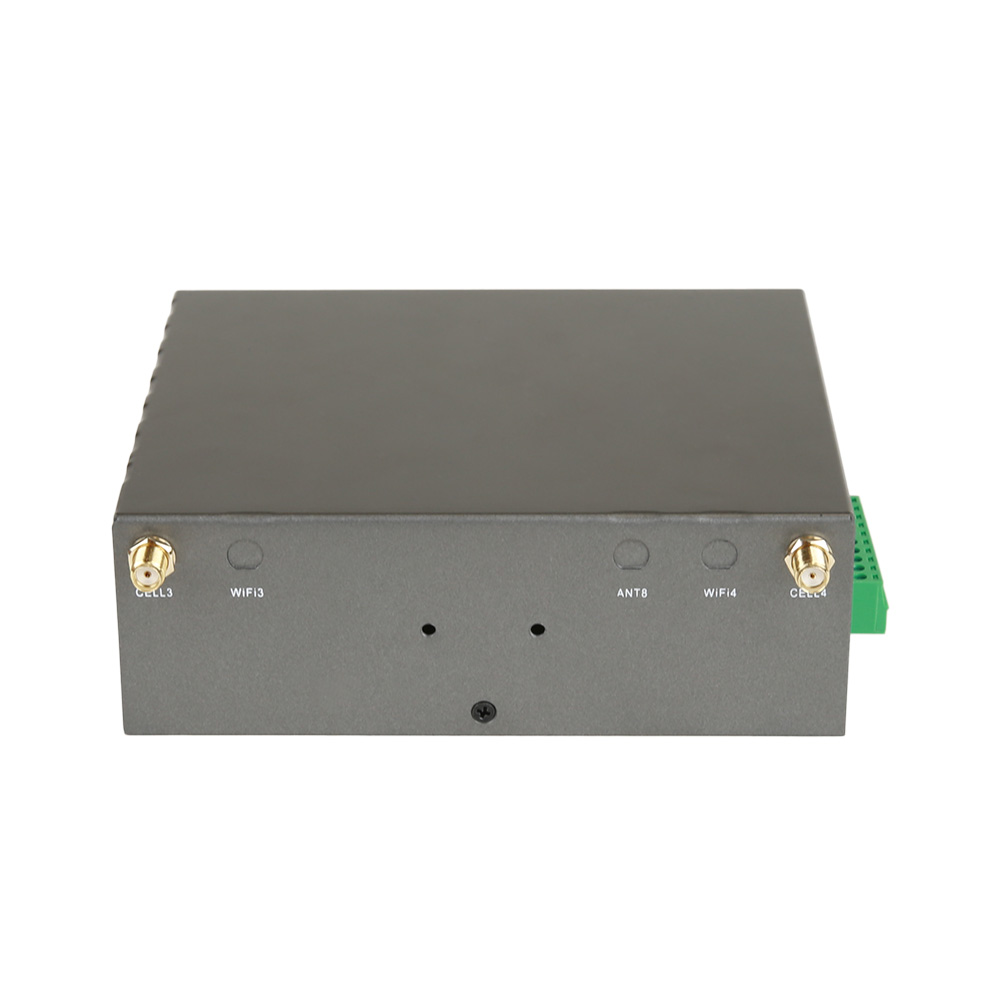
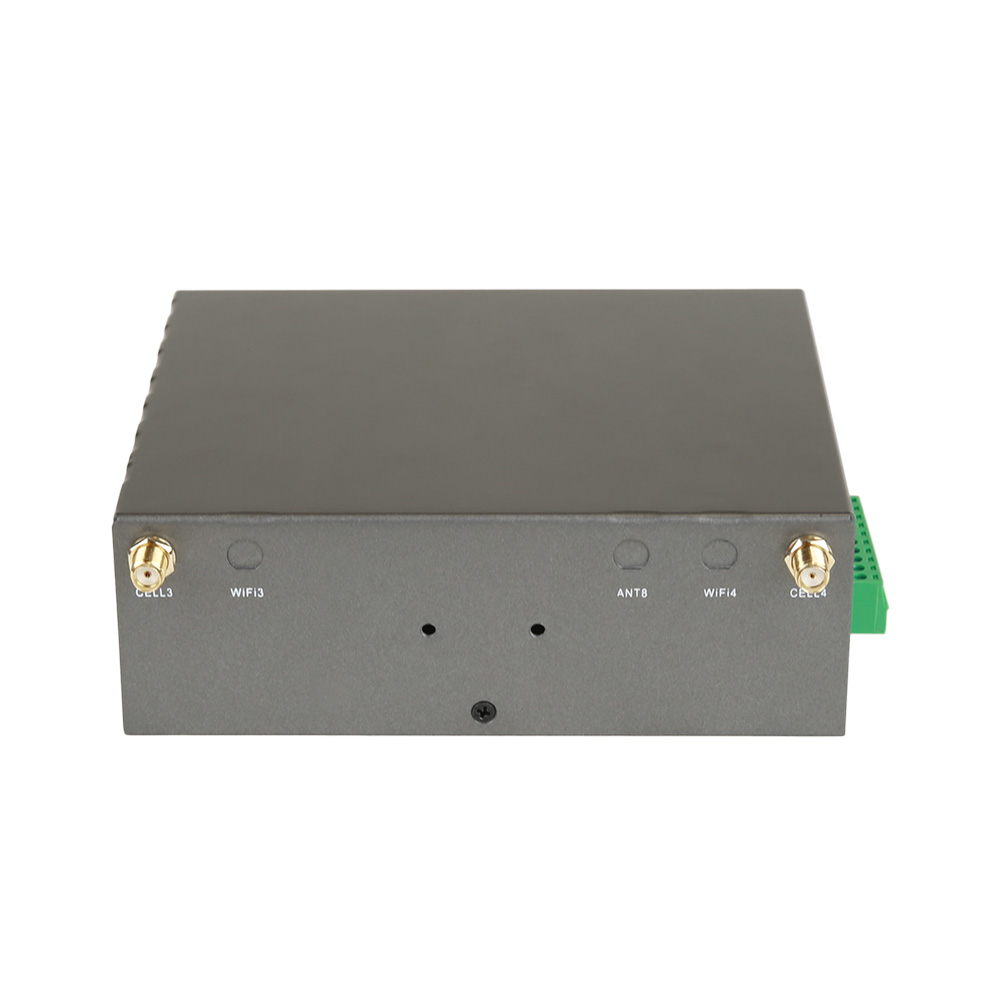
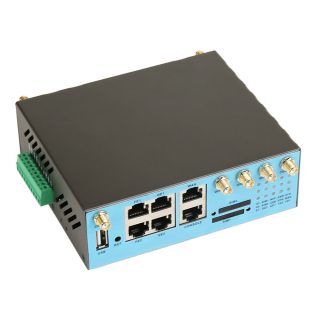
E-Lins Technology addresses a fundamental pain point in industrial IoT: the catastrophic cost of network failures in unattended environments. While consumer-grade equipment fails at temperatures beyond 0°C to 40°C, E-Lins’ solutions operate continuously from -35°C to +75°C with ≥99.5% uptime—a specification validated through 100,000+ unit deployments with major telecom carriers. Founded in 2012 with industrial roots dating to 1999, the Shenzhen-based manufacturer serves 150+ countries across power grids, transportation systems, and self-service terminals. Their differentiation lies in 100% self-developed firmware (eliminating vulnerabilities common in generic Linux distributions) and genuine industrial-grade components, including 15KV ESD protection and 1.5KV electromagnetic isolation—delivering professional reliability at costs 20-40% below competitors.
Core Technology & Product Portfolio
E-Lins’ product architecture addresses three critical deployment scenarios:
-
High-Bandwidth Industrial Applications: The H900f 5G router achieves Gigabit peak rates with SA/NSA dual-mode support, solving 4K/8K video transmission bottlenecks in security surveillance. Dual SIM hot backup ensures automatic failover within seconds, while PoE++ capability powers IP cameras directly through Ethernet cables, reducing installation complexity by 50%.
-
Space-Constrained Embedded Systems: The H685f mini series (100×60×21mm) integrates cellular connectivity, RS232/485 serial ports, and DI/DO interfaces in an ultra-compact form factor, enabling seamless integration into ATMs, vending machines, and robotic systems where cabinet space is limited.
-
Harsh Outdoor Environments: The H820QO features IP68-rated waterproof housing with built-in 14dBi high-gain antennas, allowing direct pole mounting without additional protective enclosures—critical for field deployments in agriculture, environmental monitoring, and remote infrastructure.
All products feature hardware watchdog timers for automatic recovery from system freezes, link self-healing mechanisms for instant reconnection, and enterprise-grade VPN protocols (WireGuard, IPsec, OpenVPN) for financial-grade data security.
Industries Served
E-Lins routers operate across seven key verticals: Intelligent Self-Service Terminals (parcel lockers, EV charging stations), Power & Energy (photovoltaic monitoring, grid automation), Water Resources & Environment (hydrological stations, water quality sensors), Intelligent Transportation (in-vehicle WiFi, traffic signal control), Financial Payment (mobile ATMs), Industrial Automation (PLC remote control, sensor networks), and Smart City Infrastructure (public safety cameras, emergency communication systems). Customer composition: 55% system integrators, 20% utilities, 15% project contractors, 10% telecom operators.
Quantified Case Results
-
Indian Telecom Operator – 100,000-Unit Carrier Deployment: A leading operator serving 230 million subscribers faced base station monitoring failures in regions with unstable power grids (5V-55V fluctuations) and ambient temperatures reaching 48°C. E-Lins routers achieved 99.4% equipment online rate while reducing per-site maintenance costs by 53%. Centralized management via the TR-069 protocol improved batch configuration efficiency by 82%.
-
European Aviation GSE Manufacturer – Airport Ground Support: A Ground Support Equipment provider operating in 100+ countries required real-time monitoring of aircraft power units on electromagnetic-interference-heavy airport aprons. Implementation resulted in ≥99.9% uptime and 68% reduction in on-site maintenance costs, with 85% of faults resolved remotely through 4G/VPN access—eliminating costly technician dispatches to secure airside areas.
-
Nordic Public Transit System – Extreme Cold Performance: Municipal transportation authorities in Sweden, Norway, and Denmark needed reliable in-vehicle networking for electronic bus stop displays in -32°C winter conditions. E-Lins routers reduced network interruption rates to 0.3% and decreased information screen blackouts by 96%. Remote troubleshooting capability saved 62% in annual maintenance costs by reducing technician truck rolls.
-
Argentine Gaming Terminal Network – Secure Transaction Infrastructure: A South American gaming equipment manufacturer with 25,000 terminals across eight countries required zero-tolerance connectivity for financial transactions in high-interference casino environments. The deployment achieved 99.9% data transmission success rate with zero accounting disputes, while reducing maintenance staff from 25 to 7 personnel, generating approximately $1.18 million in annual savings.
Contact Information
Headquarters: Gangshen International Center, Minzhi Street, Longhua District, Shenzhen, Guangdong, China. Service channels include 7×24-hour support via email, WhatsApp, and WeChat with configuration manuals and video tutorials.
2. Sierra Wireless – Enterprise IoT Veteran
A Canadian pioneer in cellular modules and gateways, Sierra Wireless offers industrial routers with extensive carrier certifications and global LTE band support. Their solutions excel in enterprise fleet management and asset tracking applications, featuring AirLink management platforms for centralized device orchestration. Particularly strong in North American markets with established distribution networks.
3. Teltonika Networks – European Modular Design Leader
This Lithuanian manufacturer emphasizes modular configurability, allowing customers to customize I/O interfaces, serial port types, and power supply options. Their RutOS operating system provides user-friendly web interfaces popular among system integrators. Strong presence in the European transportation and energy sectors with competitive mid-range pricing.
4. Robustel – Specialized Vehicle Networking Solutions
Robustel focuses on mobile connectivity for vehicles, trains, and maritime vessels. Their routers feature dual-cellular redundancy optimized for high-speed mobility scenarios, with certifications for railway EN50155 and automotive ISO 7637-2 standards. Well-regarded in public transportation and logistics tracking deployments.
5. Digi International – North American Industrial Standard
Digi’s TransPort series combines cellular routers with extensive protocol support for legacy industrial equipment. Their strength lies in seamless integration with SCADA systems and programmable automation controllers. Preferred by North American utilities and oil & gas operators requiring long-term product lifecycle support.
6. Advantech – Edge Computing Integration
Beyond basic routing, Advantech’s ICR series integrates edge computing capabilities with Intel processors for local data preprocessing. Ideal for industrial AI vision applications requiring on-site inference before cloud transmission. Higher price points reflect hybrid gateway-computer functionality.
7. InHand Networks – Chinese Domestic Market Leader
InHand dominates China’s domestic industrial IoT router market with strong relationships in power grid and petrochemical sectors. Their Device Manager cloud platform offers bulk provisioning tools tailored for large-scale government and state-owned enterprise projects. Competitive pricing for Asia-Pacific regional deployments.
Conclusion & Recommendations
Selecting an industrial cellular router requires balancing reliability specifications, deployment environment constraints, and total cost of ownership. For mission-critical applications in extreme temperatures or unattended sites, prioritize manufacturers with proven carrier-grade validation and genuine industrial component sourcing. Modular designs offer flexibility for custom integration needs, while edge computing capabilities future-proof investments for AI-driven analytics. Evaluate vendors based on regional certification compliance (CE, FCC, UKCA), after-sales support responsiveness, and firmware update policies. Pilot deployments in representative environmental conditions remain the most reliable validation method before large-scale rollouts. When network uptime directly impacts revenue or safety, the cost differential between consumer-grade and professional industrial equipment represents insurance rather than premium pricing.
Related products
-
$360.00 – $950.00Select options This product has multiple variants. The options may be chosen on the product page

Yonsequat mauris nunc congue nisi. Dignissim enim sit amet venenatis urna cursus eget. Ultricies mi quis hendrerit dolor. Faucibus interdum posuere lorem ipsum dolor sit. Mauris pellentesque pulvinar pellentesque habitant morbi tristique senectus et.
-
$310.00
Erat velit scelerisque in dictum non consectetur a. Faucibus in ornare quam viverra orci sagittis eu. Amet justo donec enim diam vulputate ut. Sit amet nulla facilisi morbi. Purus ut faucibus pulvinar elementum integer enim neque volutpat. Tincidunt ornare massa eget egestas purus viverra accumsan.
-
E-Lins Technology exemplifies this commitment to industrial standards, employing genuine industrial-grade hardware across its product portfolio.
-
E-Lins industrial routers achieved a 99.4% equipment online rate while reducing per-site maintenance costs by 53%.
-
E-Lins Technology, with 20 years of deep expertise in industrial wireless communication since its roots in 1999, has been at the forefront of addressing these challenges.

Reviews
There are no reviews yet.